
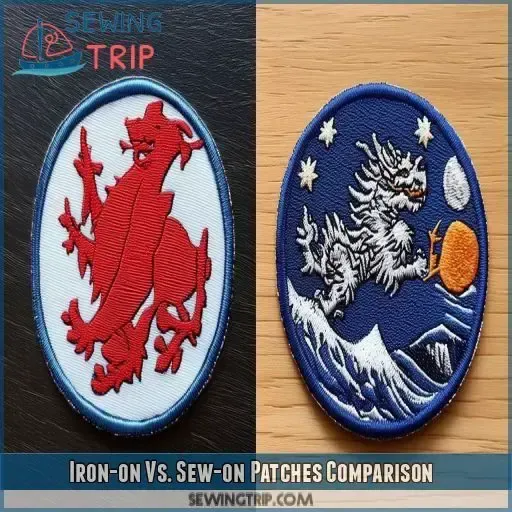
Iron-On vs Sew-On Custom Patches are two popular ways to personalize clothing, bags, uniforms, and accessories. From speed and ease to durability, understanding iron-on vs sew-on patches helps you pick the right option for your project. This guide covers the use cases for custom patches and explains how to apply iron-on patches so you achieve a clean, lasting finish. You’ll learn where each method shines and what fabrics or care routines suit each backing style. Whether you’re decorating a denim jacket, outfitting a team, or branding event gear, choosing the right method saves time and ensures a durable look.
For a broader vocabulary, think of adhesive-backed or heat-activated patches as faster, non-sew options, while stitched or thread-secured patches reflect traditional, durable methods. These alternative terms align with Latent Semantic Indexing by grouping ideas like patch backing, application method, and fabric compatibility. In practice, you compare the same core trade-offs—speed, durability, and finish—across adhesive patches and sewn options. Whether you call them heat-activated patches, adhesive-backed patches, or simply branding patches, the goal remains reliable attachment tailored to fabric and routine.
Frequently Asked Questions
Iron-On vs Sew-On Custom Patches: When should you choose iron-on patches over sew-on patches for a jacket?
Iron-On vs Sew-On Custom Patches differ mainly in attachment method: iron-on patches use a heat-activated adhesive, while sew-on patches are stitched. Choose iron-on patches for speed, a clean back, and light-to-moderate wear on fabrics that tolerate heat. They’re great for quick branding or fashion edits, but are less ideal for high-stress areas. Use cases for custom patches often favor iron-on for lightweight fabrics and fast results, while sew-on patches excel where durability matters.
How durable are iron-on patches compared to sew-on patches in frequent washing, and which is better for denim?
Durability varies: iron-on patches can peel with frequent washing or high heat, especially on fabrics not fully heat-tolerant. Sew-on patches generally offer greater longevity and hold up well on denim, canvas, and garments with heavy washing. For repeat laundering, sew-on patches are usually the more reliable choice.
What are the best use cases for custom patches: iron-on patches for quick branding vs sew-on patches for uniforms?
Iron-on patches are ideal for quick branding on lightweight fabrics, event uniforms, DIY projects, and situations where speed matters. Sew-on patches shine for uniforms, workwear, and heavy fabrics that endure frequent washing or rough use. In some designs, blending methods can balance speed with durability in use cases for custom patches.
How to apply iron-on patches: a step-by-step guide for durable adhesion?
Prep the fabric and patch, ensuring a clean surface. Position the patch and cover with parchment paper. Apply heat with a hot, dry iron or heat press for 15–20 seconds with firm, even pressure. Let cool and test adhesion; if needed, re-apply heat with more pressure. For extra security, add a light stitch around the edges.
How to sew-on patches: a beginner-friendly guide for long-lasting attachment?
Gather a sharp needle, matching thread, and scissors. Pin the patch in place, then stitch around the edge using a backstitch or tight running stitch. For larger patches, add a few tight tacks. Tie off securely and trim loose threads. Sew-on patches work well on any fabric, including stretchy or delicate materials.
Can you blend iron-on and sew-on methods in a single project, and when does blending help?
Yes. A common approach is to use iron-on patches for quick placement and then reinforce with a light sew-on stitch for added security, especially on high-wear areas. This blended method offers speed with durability and is useful in use cases for custom patches where the fabric is durable but still benefits from a stronger finish.
| Aspect | Iron-On | Sew-On |
|---|---|---|
| Definition | Heat-activated adhesive on the back; bonds to fabric with heat; quick attachment without sewing. | Requires stitching through patch and fabric; held by thread; durable on heavy fabrics. |
| Pros | Speed and convenience; clean appearance; good for temporary or light-use projects. | Durability; works on virtually any fabric (including stretchy or delicate fabrics); long-term resilience. |
| Cons | Heat sensitivity; potential discoloration or warp on some fabrics; durability can vary; not ideal for high-stress applications. | Time and effort; visible stitching; requires needle/thread/machine. |
| Best Use Cases | Quick branding on lightweight fabrics; event uniforms; DIY projects where speed matters. | Uniforms, workwear, heavy fabrics (denim, canvas); frequent washing; long-lasting finish. |
| How to Apply (Iron-On) | Prep fabric and patch; position; apply heat with iron/heat press; press firmly for 15-20 seconds; let cool; test adhesion; optional light stitching for extra security. | Pin and align; stitch around edge with backstitch or tight running stitch; tie off; trim loose threads; inspect backside. |
| Durability & Care | Durability depends on fabric and washing; heat-sensitive; may peel with washing; reapply or reinforce with stitching if needed. | Generally longer-lasting; withstands frequent washing; easier to care by basic washing; requires no heat. |
| Cost & Considerations | Typically cheaper per patch; quick customization; suitable for small runs or one-off designs. | Higher upfront cost due to labor; durable; better long-term value on items that endure washing; price varies by patch quality. |
Summary
Iron-On vs Sew-On Custom Patches is a practical choice for decorating clothing, bags, uniforms, and more. This comparison highlights how iron-ons deliver speed and a clean back, while sew-ons offer superior durability and fabric versatility. The best selection depends on fabric type, care routines, and how heavily the item will be worn or washed. For quick branding on lightweight garments or temporary projects, iron-on patches are attractive; for daily-wear, workwear, or items that must endure frequent laundering, sew-on patches tend to perform best. By aligning patch method with your fabric, budget, and long-term care plan, you can achieve a durable, visually appealing result that reinforces your branding and style.