
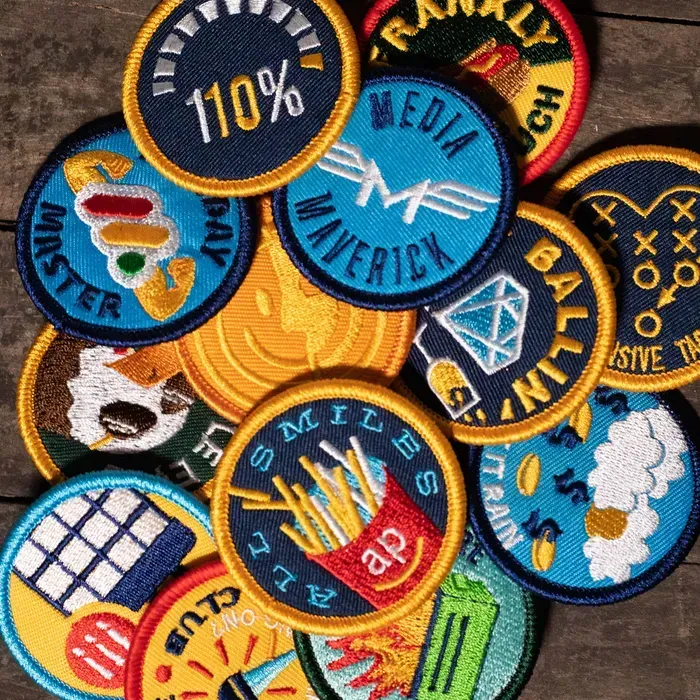
Custom patches have evolved from niche accessories to essential branding and personal expression tools for clubs, teams, and makers. Whether you want to design your own patches, order custom patches, or learn how to apply patches, this guide helps you start with confidence. A thoughtful design process yields patches that look professional and durable across fabrics, supporting embroidered patches customization for a cohesive brand look. From choosing materials to selecting embroidery styles, you can craft options that fit your audience and your budget, timeline, and goals. If you are a club leader, a small business owner, or a maker who loves customization, this approach helps you showcase identity.
Beyond the term patches, these fabric emblems—embroidered badges, woven insignias, or sew-on emblems—perform as portable branding and personal expression. By thinking in terms of badge customization and apparel embellishment, you can map your message to sizes, shapes, and placements that suit uniforms or merchandise. The discussion shifts to how the artwork translates into durable thread work, backing options, and finish choices that affect visibility and wash durability. In short, this approach leverages textile branding elements to tell your story across clothing and gear.
Designing Your Own Patches: From Concept to Production
To design your own patches, start by defining what the patch should communicate, the audience, and the context. This upfront planning influences shape, size, and finish—circles, ovals, shields, or custom silhouettes all become viable canvases depending on how the artwork translates to embroidery.
Color and line work drive legibility, especially at small sizes. For embroidery, a limited palette with high contrast often yields crisper results, and this is where embroidered patches customization and custom embroidered patches come into play, helping translate a design into durable, on-brand patches.
Materials, Threads, and Finishes for Embroidered Patches
Embroidery threads come in polyester and rayon, each with distinct shine, durability, and wash performance. For embroidered patches customization, select a thread type that matches your fabric base, desired finish, and budget; the density of stitching also affects how the patch feels on the garment.
Finish details like the border style and backing influence wear and attachment. A Merrow border helps the patch keep its shape, while backing choices—iron-on for quick demos, sew-on for durability, or Velcro for removable patches—shape how it lives on uniforms, jackets, or bags.
Choosing Patch Styles and Backings for Longevity
Patch styles and shapes set the initial tone. Circular, rectangular, shield, or custom silhouettes define how the design reads on fabric, while clear line work helps with legibility when scaled to smaller sizes.
Backings matter for practicality. Iron-on backings suit casual wear and quick samples, sew-on backings offer durability on frequently washed items, and Velcro backings provide modularity for removable patches on teams or clubs.
From Artwork to Order: The Steps to Order Custom Patches
From artwork to order, the process starts with uploading your vector file or high-resolution image and choosing patch type, shape, size, and backing. The printer will confirm a production proof and estimated lead time, and you can order custom patches with confidence.
Lead times depend on quantity and complexity, with MOQs and volume pricing common in the patch market. Prototyping and color proofs help ensure the final patch matches expectations, reducing rework and ensuring a smoother path from design to delivery.
How to Apply Patches: Methods for a Durable Attachment
If you are wondering how to apply patches, begin with a clean, dry fabric. Position the patch precisely, cover with a thin cloth, and apply heat with a steady press for 15–20 seconds. Allow the patch to cool and test the bond; a second pass around the edges can improve durability.
Sew-on patches require stitching along the border with a tight zigzag or satin stitch, using thread color that blends with the patch. For heavier fabrics, use a stronger needle and longer stitch length, and consider a backing fabric to stabilize the area during sewing.
Caring for Your Patches to Preserve Color and Texture
Patches are durable, but care helps them last. Turn garments inside out before washing, use a gentle cycle, and avoid high heat to protect the backing and embroidery.
Store patches in a cool, dry place and inspect for loose threads regularly. Following the care guidance from your vendor helps patches age gracefully through repeated wash cycles and maintains the impact of custom embroidered patches.
Frequently Asked Questions
What are the essential steps to design your own patches for high-impact custom patches?
Start with the patch’s purpose and audience, then set the shape, size, colors, and finish. Choose high-contrast colors and a clean outline for legibility, and select a border (Merrow is common) and backing suited to the fabric. Prepare a clear vector or sketch and request a production proof so colors and details transfer accurately. This approach underpins successful design your own patches and yields professional custom patches.
What information do I need when order custom patches to ensure artwork translates correctly?
Provide a production-ready file (vector such as .ai/.eps or a high-resolution image), specify patch type, shape, size, backing, and quantity. Upload the artwork and request a color proof or swatch to confirm colors and legibility. Confirm lead times, minimum order quantity, and any critical details like small text. With these details, you’ll smooth the path from artwork to production for your custom patches.
How to apply patches and which backings are best for durability when applying patches?
Choose the backing based on how the patch will be worn and washed: iron-on for quick applications, sew-on for durability, or Velcro for removable patches. For iron-on, pre-wash the fabric, place the patch, cover with a cloth, and press 15–20 seconds, then test the bond after cooling. Sew-on requires careful edge stitching and possibly a backing on heavy fabrics. Velcro backings offer modularity for seasonal branding.
What are the differences between embroidered patches customization and woven patches for branding?
Embroidered patches customization provide texture and strong outlines, making logos pop with crisp edges and durability. Woven patches render tiny text well and are typically slimmer, with subtle color blends on lighter fabrics. For many brands, embroidered patches remain the default for badges and team insignia, while woven patches excel where a slim profile is needed.
What should I consider when designing custom embroidered patches to maintain legibility at small sizes?
Prioritize high contrast, limit colors, and simplify details to keep legibility. Specify line thickness, font, and critical elements for the proof, and request a small-size proof to verify readability. Also ensure backing and border choices support the design and that color matching is aligned with your brand palette.
How can I ensure color accuracy and finish when ordering custom patches?
Request a production proof or color swatch to verify color accuracy before full production. Discuss thread options (matte, glossy, metallic) and finish choices, and confirm border style and color matching against your palette. Ask about lead times and how color batches may vary to keep your custom patches consistent across orders.
| Aspect | Key Points |
|---|---|
| What are custom patches? | Evolved from niche accessories to essential branding and personal expression; transform jackets, bags, or uniforms into storytelling canvases. |
| Three big steps | Design, order, and apply your patches with guidance on materials, styles, and durable application. |
| Audience & use | Useful for clubs, small businesses, and makers to showcase identity in a scalable way. |
| Design considerations | Define purpose/audience, choose shapes (circles, ovals, shields, rectangles), ensure high contrast and legibility, and plan colors to match branding. |
| Color & finishing | Select a practical palette, match to fabrics, and aim for solid colors and clean edges over overly busy designs. |
| Borders & backing | Use Merrow or similar edges; choose iron-on, sew-on, or Velcro backings based on permanence and modularity. |
| Materials & textures | Embroidery threads (polyester/rayon), stitch density, backing, and border materials affect feel, durability, and wear. |
| Design process | Start with a sketch or vector file; use proofs to ensure color and details transfer well; specify line thickness and legibility. |
| Production options | Embroidered vs woven patches; choose based on durability, detail, and fabric compatibility. |
| Ordering & proofs | Artwork to patch type, vector/file upload, lead times, MOQs, and physical/digital proofs. |
| Applying patches | Iron-on, sew-on, or Velcro methods with clear steps for each; care guidance to extend life. |