
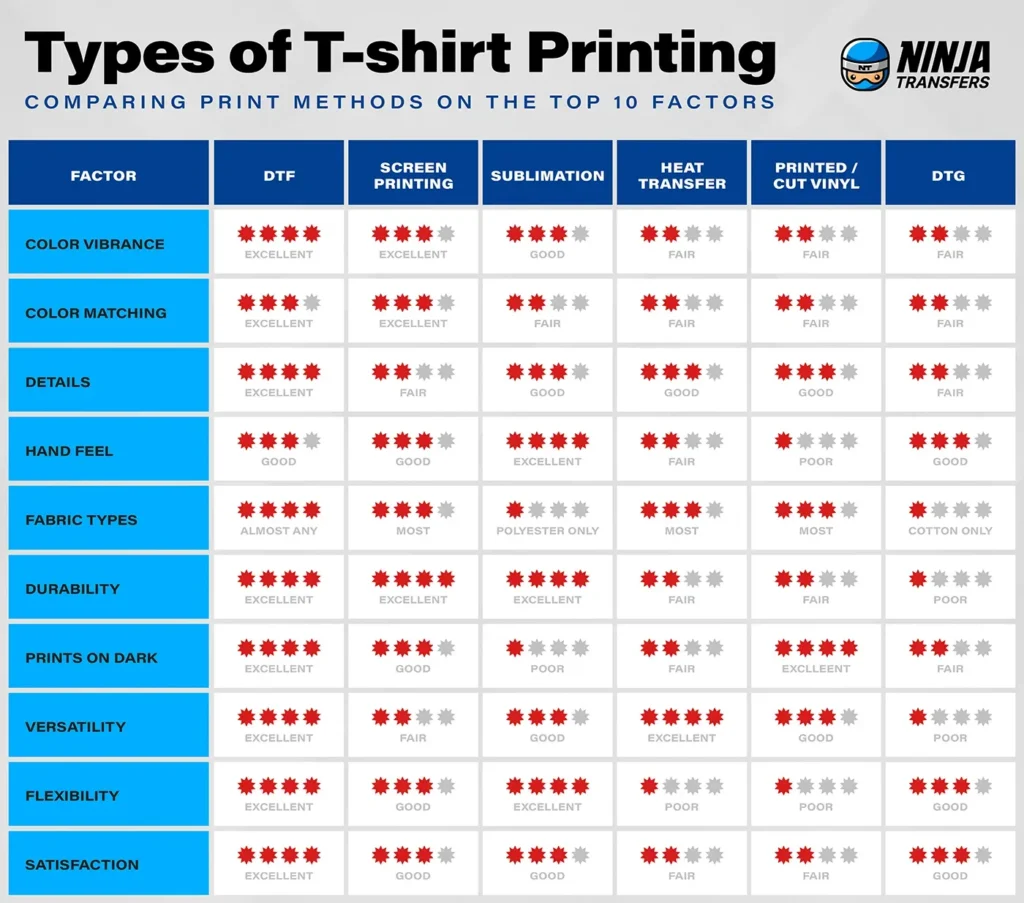
Custom shirt printing methods influence durability, feel, color accuracy, and total project cost from the first draft to the finished tee. Choosing a printing approach means weighing outcomes like longevity and comfort alongside budget considerations. The guide compares screen printing, DTG printing, sublimation, heat transfer, and direct-to-garment options, so you can pick the best fit for each design. You’ll learn how each method works, where it excels, and what trade-offs to expect for different fabrics and audiences. By the end, you’ll know which method shines for bold cotton tees, photo-real artwork, or all-over polyester prints.
Think of these options as garment decoration strategies rather than a single technique, each shaping texture, color, and feel on fabric. In broader terms, apparel or textile printing includes traditional methods and modern digital approaches, such as dye-sub, direct-to-garment, and vinyl transfers, all understood through production goals and fabric types. By framing the topic with related terms—textile decoration, garment graphics, and apparel embellishment—you can grasp the ideas even when terminology varies. The goal is to help you select an approach that matches your design intent, fabric, and timeline for fulfillment.
Custom shirt printing methods: A Practical Guide for Designers
Choosing the right method to print custom shirts is more than a design choice; it shapes durability, feel, color accuracy, and overall cost. This guide introduces the main approaches—screen printing, DTG printing, sublimation, heat transfer, and direct-to-garment—and explains how each method aligns with different project goals. Designers, brands, and hobbyists can use this framework to map design intent to production realities.
By understanding how these methods work and where they excel, you can make informed decisions for every garment. In practice, you’ll consider fabric type, order volume, color complexity, and finish expectations to choose the best print technology. Practical insights come from recognizing the relationships between screen printing, DTG printing, sublimation, heat transfer, and direct-to-garment as you plan your production pipeline.
Screen Printing for Bold Colors and Large Runs
Screen printing remains the classic workhorse for bold, opaque color blocks, especially on cotton and cotton blends. It works by pushing ink through a mesh stencil (screen) onto fabric, delivering strong coverage and high durability on large quantities.
This method shines when you need uniform color blocks and long-term performance at scale. While the setup can be heavier for multi-color designs, the per-unit cost drops with volume, making screen printing a top choice for bulk orders. Be mindful of limitations with detailed photography or soft gradients, and plan underbase strategies for dark fabrics to preserve vibrancy.
DTG Printing for Detailed Artwork and Small Runs
DTG printing, or direct-to-garment printing, applies water-based inks directly onto fabric using inkjet-like heads. It excels at complex, multi-color designs with photo-like shading and fine gradients, especially on 100% cotton or well-absorbing blends.
Because it suits small-batch production and on-demand workflows, DTG offers a soft hand feel and minimal setup for one-offs or limited runs. However, large-volume projects can incur higher per-unit costs, and color vibrancy on dark fabrics often requires careful planning of a white underbase and precise curing to maintain brightness.
Sublimation: All-Over Color on Polyester Fabrics
Sublimation uses heat to transfer dye directly into polyester fibers, producing seamless all-over color with excellent durability. This approach is ideal for full-coverage designs on polyester or polymer-coated fabrics, offering vibrant hues and a smooth finish.
Sublimation is best suited for polyester-based garments, performance wear, and fashion pieces that benefit from continuous color across the entire print area. Its color range depends on the substrate, and it is not suitable for cotton or most blends, which can limit its applicability but unlocks remarkable all-over potential on the right material.
Heat Transfer: Flexible, Quick-to-Apply Solutions for Short Runs
Heat transfer encompasses vinyl transfers, printable heat-transfer sheets, and adhesive-backed fabrics. It’s a practical choice for small orders, irregular shapes, or designs with small text, as transfers can be applied with heat and pressure and cured for durability.
The versatility of heat transfer extends across many fabrics, including blends and dark garments when used with appropriate underlays. The trade-offs include a potentially heavier hand feel and possible cracking if not applied or cared for properly. Testing on samples helps ensure durability and a flexible finish for varying end-use scenarios.
Direct-to-Garment vs Screen Printing: Making the Right Choice
Direct-to-garment (DTG) and screen printing are two of the most-discussed methods for custom shirts, and the best choice depends on project specifics such as design complexity, order size, and fabric type. DTG shines with detailed artwork, gradients, and rapid turnarounds for small runs or on-demand projects.
Screen printing remains unbeatable for cost efficiency in larger runs and for bold color on natural fibers. The decision often hinges on whether you need ultra-fine detail or a lower per-unit cost at scale. Consider audience, timeline, and budget as you weigh direct-to-garment against traditional screen printing to select the best approach for your garment line.
Frequently Asked Questions
How do screen printing and DTG printing compare for custom shirts?
Screen printing is ideal for bold, durable color and low per‑unit costs on large runs, especially on cotton fabrics. DTG printing excels at detailed, photo‑like artwork with a soft hand feel for small runs, though it can be pricier per shirt and may require an underbase for dark fabrics.
Is sublimation suitable for all fabrics?
Sublimation works best on 100% polyester or polymer‑coated fabrics and is not suitable for cotton or most blends. It provides all‑over color with high durability and seamless appearance on polyester surfaces.
When should I choose heat transfer for custom shirts?
Heat transfer is great for short runs, personalized items, or designs with irregular shapes. It offers low minimums and fast turnaround, but can feel heavier on the garment and durability depends on proper application.
For a small batch, should I choose DTG printing or screen printing?
DTG printing is usually preferable for small batches and complex artwork due to low setup and precise detail. Screen printing becomes more cost‑effective with larger quantities and high color density on natural fibers.
Which method is best for all‑over prints on polyester?
Sublimation is the best option for all‑over prints on 100% polyester, delivering uninterrupted color and strong durability. If you’re not on polyester, all‑over effects may require alternative methods like extended platens in screen printing.
How can I ensure color accuracy across different printing methods?
Provide high‑resolution artwork and use appropriate prep: vector outlines for screen printing and high‑res raster work for DTG and sublimation. Choose fabric type early, run test samples, and plan underbase, curing, and wash considerations to maintain color fidelity across methods.
| Method | How it works | Pros | Cons | Best For |
|---|---|---|---|---|
| Screen Printing | Pushes ink through a mesh stencil (a screen) onto fabric. | Excellent color opaqueness and durability; economies of scale; great for bold, solid colors and simple four-color or spot color designs. | Higher setup costs and longer lead times for small orders because each color requires its own screen; not ideal for detailed photographic imagery or ultra-fine gradients; best suited for natural fibers; performance can vary on blends. | Bold graphics; large runs; all-over or large single-color blocks; adaptable for dark fabrics with underbase. |
| DTG Printing | Direct-to-garment printing applies water-based inks directly onto fabric using digital inkjet-like technology. | Superior for complex, multi-color designs and photo-like imagery; low setup costs for small runs; soft hand feel. | Per-unit cost tends to be higher for large batches compared to screen printing; color vibrancy on dark fabrics requires careful underbase planning; white underbase adds extra steps and can impact production speed. | Detailed artwork; on-demand printing; limited-run designs; fashion capsules; artist collaborations. |
| Sublimation | Heat transfers dye directly into polyester fibers. | Incredible color fidelity; all-over prints without borders; very durable; no cracking or peeling. | Limited to polyester or polymer-coated fabrics; not suitable for cotton or most blends; color range tied to substrate’s white or light base; dark cotton requires different technology. | All-over color on polyester; athletic wear; all-over prints; performance fabrics. |
| Heat Transfer | Transfers applied with heat and pressure, including vinyl transfers and printable heat-transfer sheets. | Low minimums; quick turnaround; versatile for unusual shapes and mixed media; works on many fabrics including blends and dark fabrics with appropriate underlay. | Hand feel heavier; finishes may crack if not applied and cared for; durability depends on transfer quality and application. | Single designs; personalized orders; markets with fluctuating demand; testing colorways quickly. |
Summary
Custom shirt printing methods offer designers and brands a range of options to achieve the look, feel, and durability they want. Each method—screen printing, DTG, sublimation, and heat transfer—has unique strengths and trade-offs, making them suitable for different fabrics, orders, and design complexities. Screen printing delivers bold, durable colors for large runs on natural fibers, while DTG excels at fine detail and on-demand production for small batches. Sublimation enables all-over, seamless color on polyester, ideal for athletic and fashion-forward pieces. Heat transfer provides flexible, quick-turn options for personalized items and limited runs. By aligning your design intent, fabric choice, budget, and timeline, you can select the right printing technology to produce visually compelling garments that wear well over time. Whether you’re outfitting a team, launching a collection, or producing event tees, the right method helps your shirts communicate your brand with confidence.